
Dynamics NAV End of Life: Your next steps

Dynamics NAV End of Life - Everything You Need to Know

What is Dynamics NAV End of Life?

Dynamics NAV reached end of life in January 2023, meaning Microsoft no longer provides security patches, bug fixes, or technical support. This applies to all versions of NAV (sometimes called Navision).

Once mainstream and extended support ends, your business faces increased risks, including:

  • Security vulnerabilities
  • Compliance issues
  • System instability
  • Higher maintenance costs

When Did Microsoft End Support for Dynamics NAV?

  • Mainstream support ended: January 2023
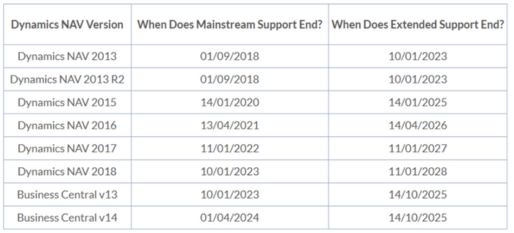
  • Extended support deadlines vary by version (see table).

After these dates, Microsoft stops releasing updates, making Dynamics NAV end of life a critical turning point for all users.
 

What Should Businesses Do After Dynamics NAV End of Life?

If you are still running NAV, you should start planning your next step now. The recommended path is to migrate from Dynamics NAV to Microsoft Dynamics 365 Business Central.

This ensures your ERP system remains:

  • Secure
  • Cloud-ready
  • Scalable
  • Integrated with Microsoft 365 tools (Outlook, Teams, Excel, Power BI)

Why Upgrade to Business Central After NAV End of Life?

Microsoft Dynamics 365 Business Central is the modern successor to NAV. It combines familiar NAV functionality with a cloud-first, AI-driven platform.

Key Benefits of Business Central vs NAV:

  • Automatic cloud updates (no manual upgrades)
  • Stronger Microsoft-managed security
  • Subscription-based pricing (no large upfront costs)
  • AI-powered insights and analytics
  • Deep integration with Microsoft ecosystem

Is Business Central the Same as NAV?

Business Central is the evolution of NAV, redesigned for the cloud era. It removes the risks of on-premise ERP while adding modern features like:

  • Continuous updates
  • Built-in AI tools
  • Global scalability
  • Advanced data insights

How to Transition from Dynamics NAV to Business Central

Migrating from NAV doesn’t have to be complex. A structured transition plan usually involves:

  1. Reviewing your current NAV setup
  2. Mapping business processes to Business Central
  3. Building a phased migration roadmap
  4. Training your team on the new platform

Our ERP specialists can help you create a tailored migration plan to move from Dynamics NAV End of Life to Business Central with minimal disruption.

Want to learn more?

Summary: Dynamics NAV End of Life and Your Next Steps

  • Dynamics NAV reached end of life in 2023.
  • Continuing on NAV creates security and compliance risks.
  • Microsoft recommends migrating to Dynamics 365 Business Central, the modern ERP solution.
  • Business Central offers cloud scalability, AI features, and seamless Microsoft 365 integration.

Start your NAV to Business Central upgrade today. Contact our team to explore your best options.